

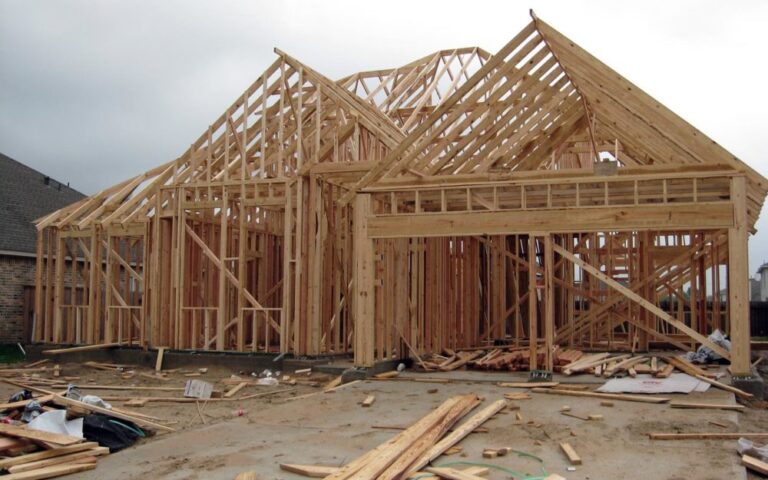
In general wood construction, progress is rarely disrupted by one major failure.
Instead, it’s the accumulation of small, repeated interruptions—moments where work pauses just long enough to break momentum.
This case study explores how a U.S.-based wood construction crew improved day-to-day reliability on site by making a single, often-overlooked change: switching to 21° plastic strip collated nails.
The result wasn’t dramatic.
It was something far more valuable—consistent flow.
Project Context: Framing Under Real-World Conditions
The project involved low-rise residential and light commercial wood structures, framed by rotating crews of experienced carpenters. Schedules were tight but realistic. Inspections were pre-booked. Material deliveries were planned to the day.
Like many U.S. wood construction sites, the jobsite itself was dynamic:
Crews worked in parallel across different sections
Weather conditions shifted between dry mornings and humid afternoons
Nailers were shared between operators and brands
Under these conditions, productivity depended less on raw speed and more on how smoothly each task transitioned into the next.
The Hidden Cost of Micro-Interruptions
At first glance, the crew appeared productive. Walls went up. Decking progressed. No single issue justified concern.
But foremen began noticing patterns during daily walk-throughs.
Framing runs were being interrupted—not once or twice, but repeatedly:
Nailers paused mid-run due to inconsistent feeding
Operators stopped to re-seat nails that hadn’t driven cleanly
Workers bent down frequently to clear debris near active framing zones
Momentum slowed as attention shifted from framing to tool adjustment
Each interruption was minor. But across 8–12 workers over a full shift, those moments stacked up quietly.
“We weren’t behind because of mistakes,”
“We were behind because nothing ever stayed uninterrupted for long.”
Why the Existing Nail Setup Became a Bottleneck
The crew relied on collated nails that were widely used and readily available. On paper, they met all requirements.
In practice, jobsite conditions exposed their limitations.
Paper and wire collation introduced variables that changed throughout the day:
Paper strips reacted to moisture, affecting feed consistency
Wire fragments accumulated around work areas
Feeding behavior varied between nailer models
These weren’t defects. They were tolerances colliding with real-world conditions.
And in wood construction, tolerance issues don’t announce themselves—they slowly erode confidence.
The Decision to Trial 21° Plastic Strip Collated Nails
The decision didn’t come from a cost analysis. It came from frustration.
A site foreman proposed testing 21° plastic strip collated nails on a limited section of framing—nothing formal, no expectations.
The reasoning was practical:
The 21° angle matched the majority of nailers already on site
Plastic strip collation promised cleaner separation
The nails were readily available in framing lengths already used
No process changes were made.
Crews framed exactly as before.
That was intentional. Any improvement needed to come from the nails—not altered behavior.
Early Observations: Subtle but Meaningful
The first few hours revealed nothing dramatic. No one commented. Work continued.
By the second day, small differences became noticeable:
Nailers ran longer without interruption
Drive depth appeared more uniform across operators
Less debris accumulated near framing lines
Fewer mid-task tool adjustments were needed
The crew didn’t move faster.
They simply stopped slowing down.
“It wasn’t about speed,” one carpenter said.
“It was about staying in the zone.”
How Consistency Changed Crew Behavior
As interruptions decreased, something less measurable began to change: behavior.
Operators trusted their nailers more
Tool handoffs became smoother
Foremen spent less time troubleshooting and more time coordinating
By the end of the week, framing sessions felt more predictable. Crews could estimate how much work would be completed before breaks and shift changes.
In construction, that predictability reduces fatigue as much as it improves output.
Why 21° Plastic Strip Collation Worked in This Case
The improvement came from eliminating variables, not adding features.
The 21° angle supported stable feeding across multiple nailer brands
Plastic strip collation released cleanly during high-frequency firing
Consistent spacing reduced feed irregularities
Together, these factors minimized the micro-failures that disrupt workflow under pressure.
Long-Term Impact: Quiet Reliability
Weeks later, the nails were no longer discussed on site.
That absence of discussion mattered.
When crews stop thinking about fasteners, they focus on layout, alignment, and structural integrity. That’s where craftsmanship lives.
Takeaway for U.S. Wood Construction Teams
This case study isn’t about choosing a “better” nail.
It’s about choosing predictability in imperfect conditions.
In general wood construction, consistency protects schedules, morale, and trust between crews and supervisors.
For this U.S. jobsite, 21° plastic strip collated nails didn’t promise performance—they delivered reliability quietly, day after day.
And in construction, that kind of reliability is what keeps projects moving forward.